
Why does performance change when people are watching?
Short answer
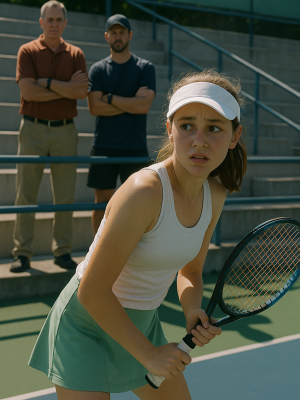
Performance often changes when people are watching because visibility adds meaning. When a player feels observed, evaluated or judged, attention naturally shifts from playing the game to managing how they are seen.
This shift increases self-monitoring and control, which can interfere with timing, rhythm, and natural decision making.
Nothing is wrong.
The system is responding to being seen.
What “Being Watched” Adds to a Performance Moment
When players are alone or training, attention is usually on:
The ball
The task
The next action
When people are watching, additional layers appear:
Awareness of observers
Concern about impressions
Sensitivity to reaction or judgement
Even quiet or supportive audiences can change how a moment feels.
Visibility adds meaning to performance, not just pressure.
Why Visibility Changes How the System Organises Itself
Being watched activates a natural human response.
When visibility increases, the system often tries to:
Avoid mistakes
Protect reputation
Maintain control
To do this, attention turns inward.
In fast, instinctive sports like tennis, inward attention can interrupt:
Flow
Timing
Automatic responses
The player starts managing themselves instead of responding to the game.
Why This Can Happen Even Without Obvious Anxiety
Many players say:
“I wasn’t nervous”
“I didn’t feel stressed”
“I just knew people were watching”
This is important.
Performance changes under observation do not require fear or anxiety.
They only require awareness of being seen.
The response is often subtle and unconscious.
The Performance Decoder Perspective
In the Performance Decoder framework, visibility can activate Identity Lock, where performance becomes linked to how the player is perceived rather than what they are doing.
Another related response is the Armour Reflex, where players increase control to protect themselves under observation.
These responses are protective.
They are attempts to manage visibility, not signs of fragility.
They are especially common in junior players as they learn to perform in front of parents, coaches, peers, and officials.
How This Shows Up in Real Players
You might notice:
Players playing more freely when unobserved
Tightening when parents or coaches arrive
Hesitation at key moments
A drop in rhythm once attention shifts outward
Often the change is described as:
“I felt fine until I realised people were watching.”
Why Understanding This Matters for Parents and Coaches
When visibility effects are misunderstood, adults may:
Increase instruction from the sidelines
Add reassurance at the wrong time
Believe the player lacks confidence
When the mechanism is understood:
Adults become more intentional with presence
Communication becomes quieter
Pressure reduces without words
Players feel safer to express
Sometimes support means less visibility, not more encouragement.
Where to Go Next
This same mechanism can show up elsewhere
You can explore those questions next:
Why do players play well in training but freeze in matches?
Why does confidence seem to disappear under pressure?
Why do players start overthinking when it matters most?